

The foreign policy establishment has spent years trying to fit President Donald Trump into a familiar ideological box. Is he a hawk? A dove? A realist? An isolationist? The answer is simpler than any of those labels, and more coherent than his critics will admit: Trump is a pragmatic dealmaker who believes that America will be best positioned to win its global competition with China by recruiting more friendlies and having fewer foes.
The clearest expression of this worldview is in his leadership change doctrine. President Trump is not pursuing regime change in the traditional sense, which consists of the wholesale dismantling of a government and its replacement with something ideologically friendly to the current government in Washington. As Americans are all too familiar with those gambits, democracy projects are expensive, bloody, and reliably counterproductive. President Trump, a longtime pragmatist, has little to no interest in it. What he is pursuing is narrower and considerably more achievable: removing or isolating specific leaders who have aligned themselves with America’s top adversaries and replacing them, or creating conditions for their replacement, with figures who are at minimum willing to collaborate with the United States.
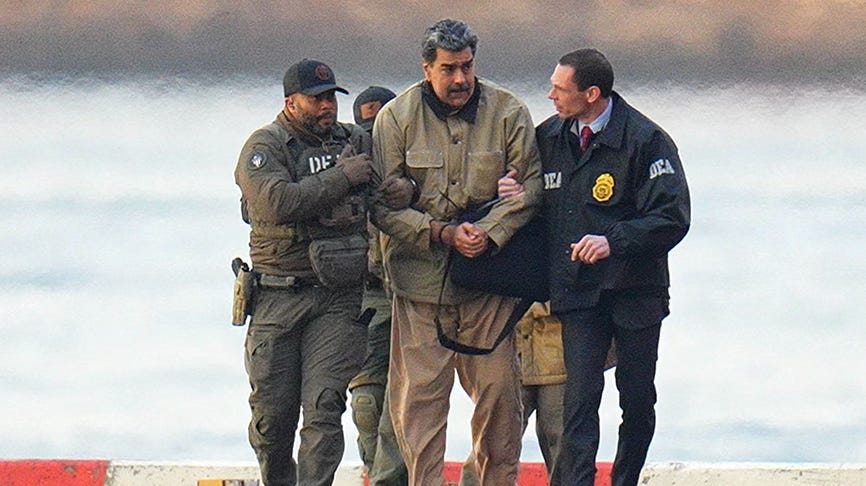
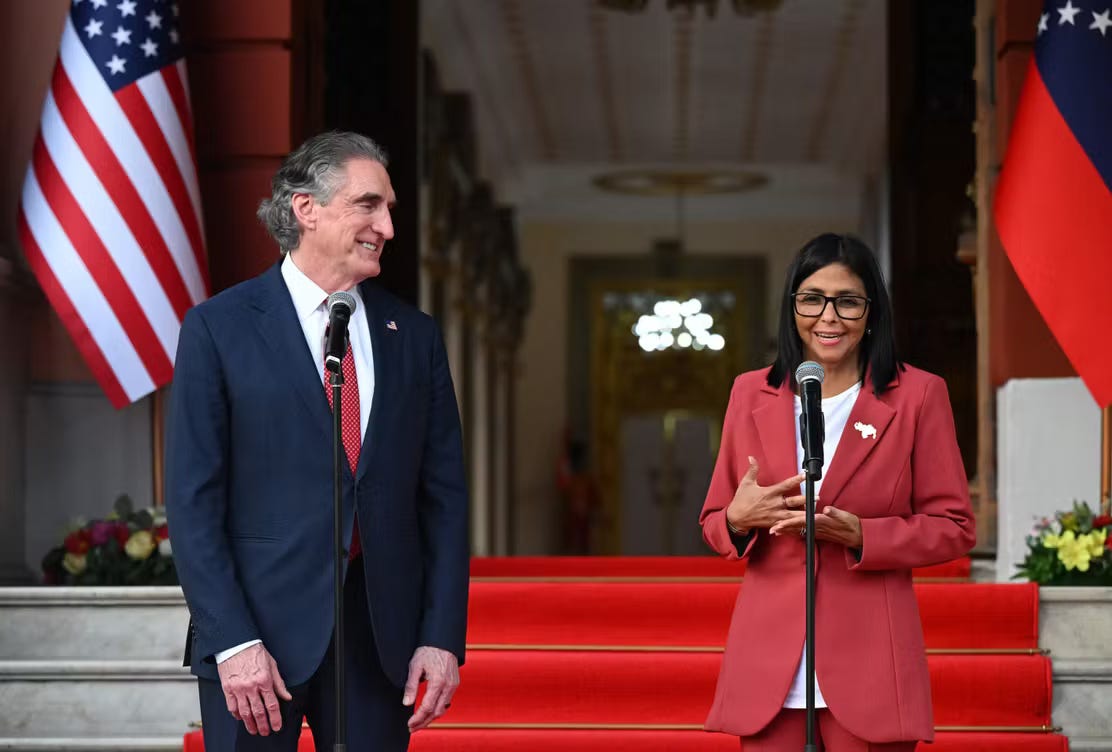
Venezuela is the clearest current example. Nicolás Maduro spent years building Caracas into a node in Beijing’s hemispheric influence network, offering oil flows, political cover, and geographic positioning in exchange for economic lifelines that have allowed his government to survive decades of sanctions and internal pressure. Trump’s approach has not been to call for revolution or democratic transformation (which has long been the standard interventionist script) but to methodically chip away at what Maduro left behind in Caracas. This includes tightening the economic vice, and backing governmental and opposition figures who signal a willingness to reorient Venezuela’s foreign relationships. The goal is not a Venezuela that looks like a Jeffersonian democracy. The goal is a Venezuela that is no longer a reliable asset for Beijing, Moscow, Tehran, and Havana.
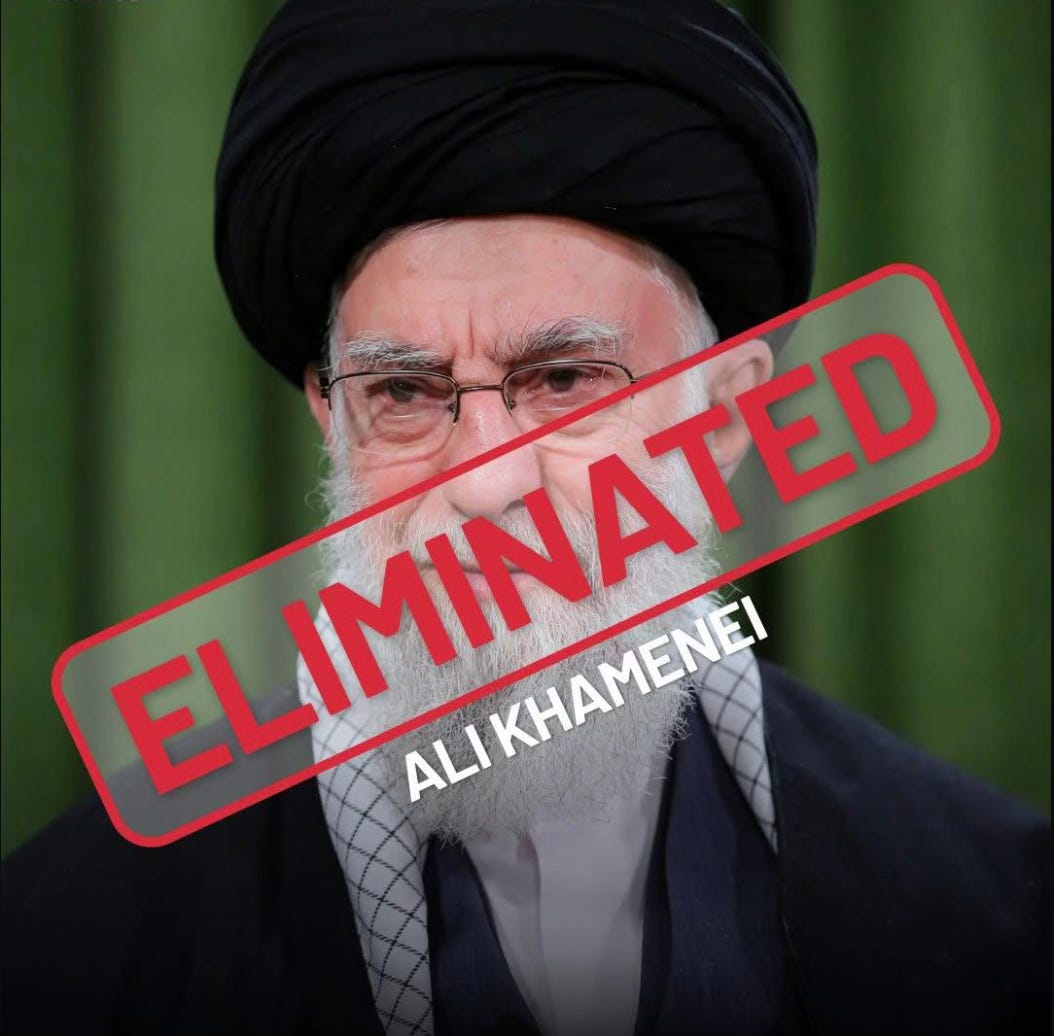
Iran follows the same logic. The Islamic Republic under the late Ali Khamenei positioned itself as a strategic partner of China, Russia, and North Korea, offering a sanctions-busting energy relationship and a permanent pressure point on U.S. interests from the Levant to the Gulf. The president’s maximum pressure campaign was primarily about the nuclear file. And as the ongoing military operation against Tehran shows, it was also about the question of who leads Iran and whether that leadership’s survival depends on America’s adversaries or on coming to terms with Washington.
Critics from both the left and the right will find something to dislike in this approach. Liberal internationalists will object that the human rights situations in target countries are being subordinated to realpolitik. They are correct, and Trump probably would not dispute it. Interventionists will argue that full regime change is being left off the table, which also seems correct in the case of Iran today. But that is precisely the point. Regime change is expensive and risky. Leadership change is surgical, deniable, and reversible if the incoming leadership proves unreliable. It also allows for the Trump Administration to not consume the baggage of their predecessors. Sure, the upside of an Iran with the regime still in place is considerably lower than without the mullahs, but ultimately, those long term plans must be guided by the Iranian people and not foreign armies.
What Trump understands, and what the foreign policy establishment has repeatedly failed to internalize, is that the United States does not only need to prioritize ideological allies. It also needs to increase its pool of reliable economic and trading partners. A Venezuela that trades oil on open markets instead of routing it through Beijing’s shadow networks serves American interests regardless of what political system governs Caracas. A neutered Iran that dismantles its regional proxies serves American interests regardless of whether the mullahs remain nominally in some ceremonial position atop the leadership ranks.
The game is not to build a coalition of on-paper, like-minded democracies (see: our grossly incompetent European partners for how well that’s working right now). The game is to build a coalition of American trading and security partners, and to ensure that China’s coalition shrinks. Every government that moves from Beijing’s orbit into even a neutral posture is a partial win. Every leader who depends on Chinese economic patronage for survival is a problem to be managed or, where possible, replaced.
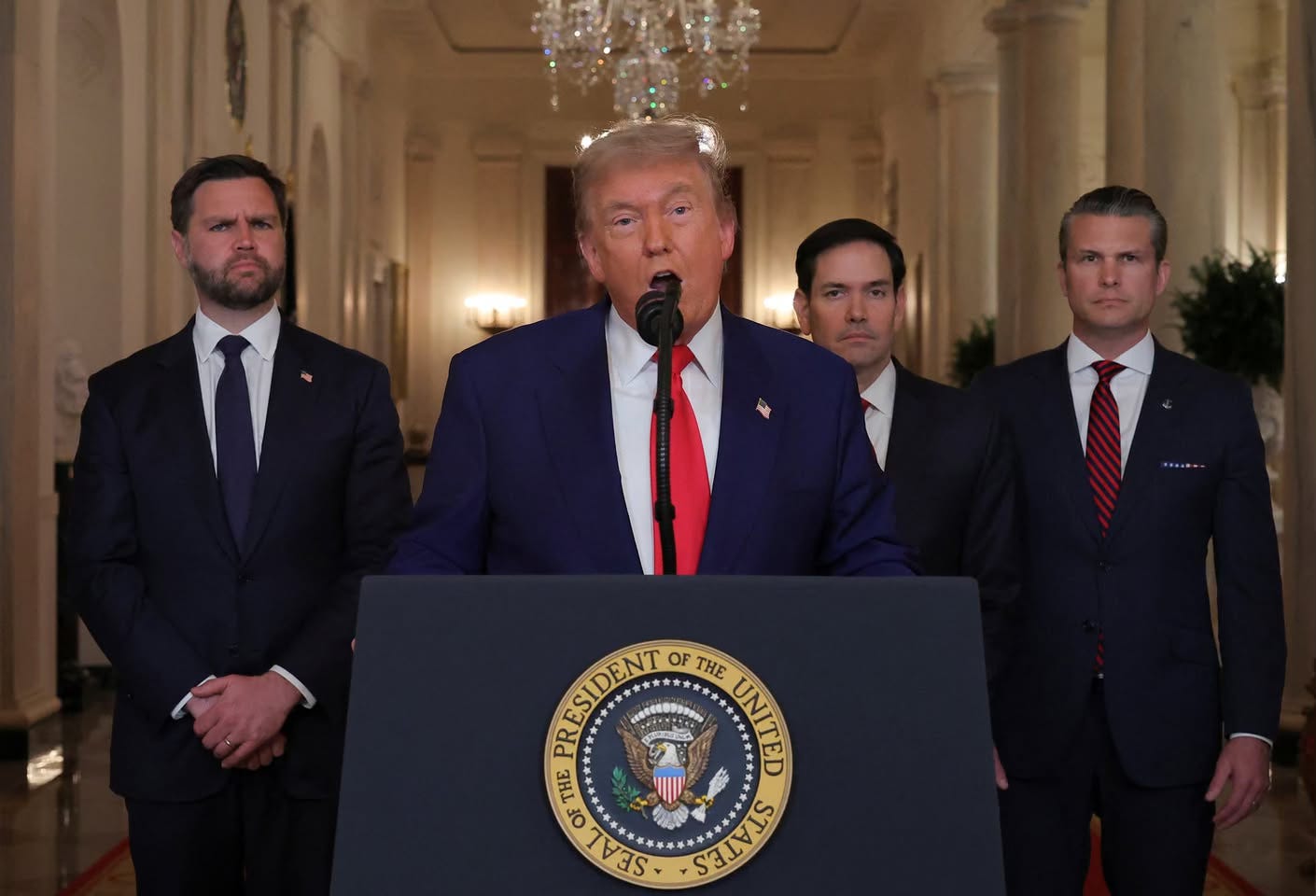
President Trump is not a hardened ideologue, though he is a fierce competitor, and he understands what’s at stake in our competition with China. And judging by the actions of his second term in office, his uniquely Trumpian foreign policy doctrine is making progress in adding more players to America’s team, while simultaneously isolating and weakening antagonists. This pragmatic POTUS is not letting perfect become the enemy of good.
All true but it is a threatening environment. Mr. Vennaccio mentioned the mid-terms but there is another election next month. The EU is going all out to oust Orban. If they succeed, it will remove our most reliable ally in Europe and also hamper a rapprochement with Russia. Even if they don't succeed, they are working on multiple ways to neuter him. Either way it is a crisis. Other than Hungary only Slovakia is generally positive. The others are all hostile to varying degrees.
Really well written and to the point. Mr. Trump understands the entire picture better than all the so called "professionals". Hopefully the Republicans will maintain control of the House and Senate in the Mid-Terms, otherwise these plans will go up in smoke with all the "investigations"