

Since the U.S.-Israeli strikes that killed Ayatollah Ali Khamenei on February 28th, the Islamic Republic has been engaged in something of an elaborate performance. It has a new Supreme Leader on paper: Mojtaba Khamenei, the 56-year-old son of the slain Ayatollah. It has issued statements in his name (a new account has popped up on X). It has broadcast his image against waving Iranian flags. What it cannot produce is the man himself.
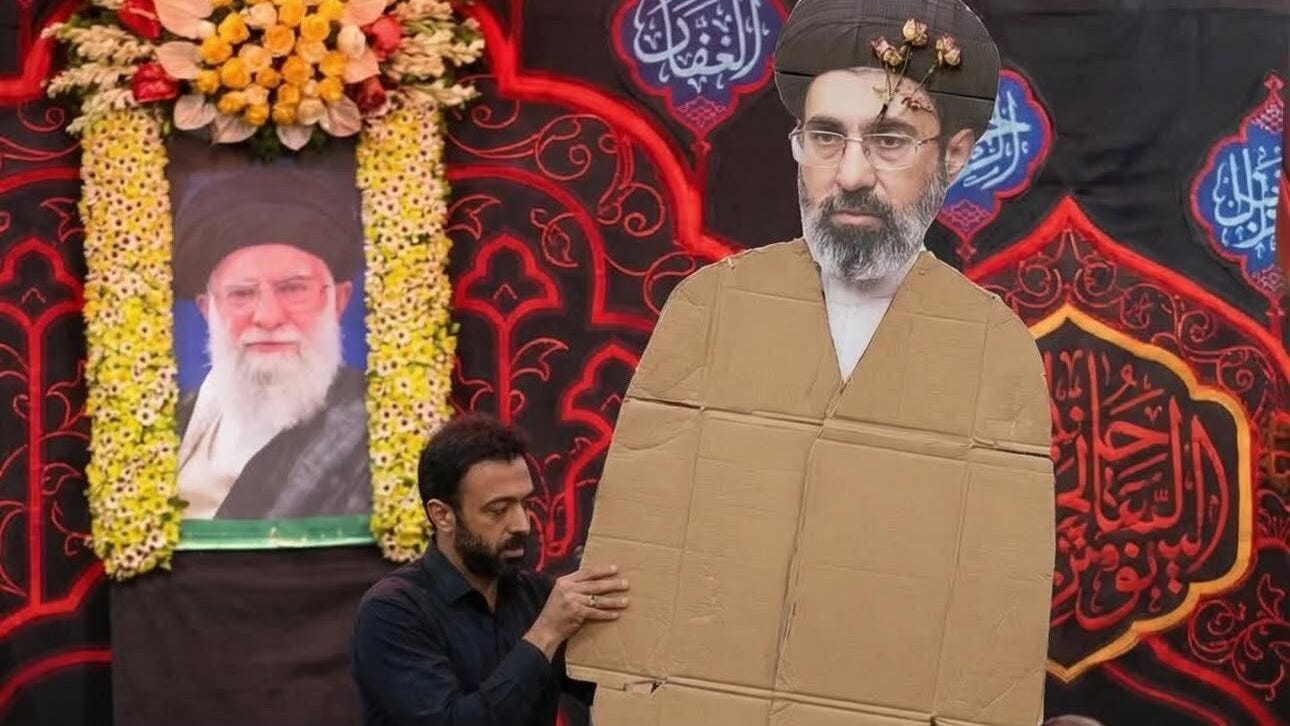
According to news sources who have circumvented Iran’s near-total internet blackout to smuggle information to exiled dissidents in London, Mojtaba Khamenei is currently in the intensive care unit of Sina University Hospital in Tehran’s historic quarter, where an entire section of the building has been sealed off and placed under heavy security. The report is grim: he is understood to have lost at least one leg and is believed to have sustained severe internal injuries, possibly to his stomach or liver. Multiple outlets, drawing on these clandestine sources, report that Iran is currently being run by regional commanders of the Islamic Revolutionary Guard Corps, who are believed to be under orders to fight on indefinitely, even without a clear structure of leadership authority. The phrase circulating in dissident circles captures the situation perfectly: Iran is governed by a “Ghost Ayatollah.”
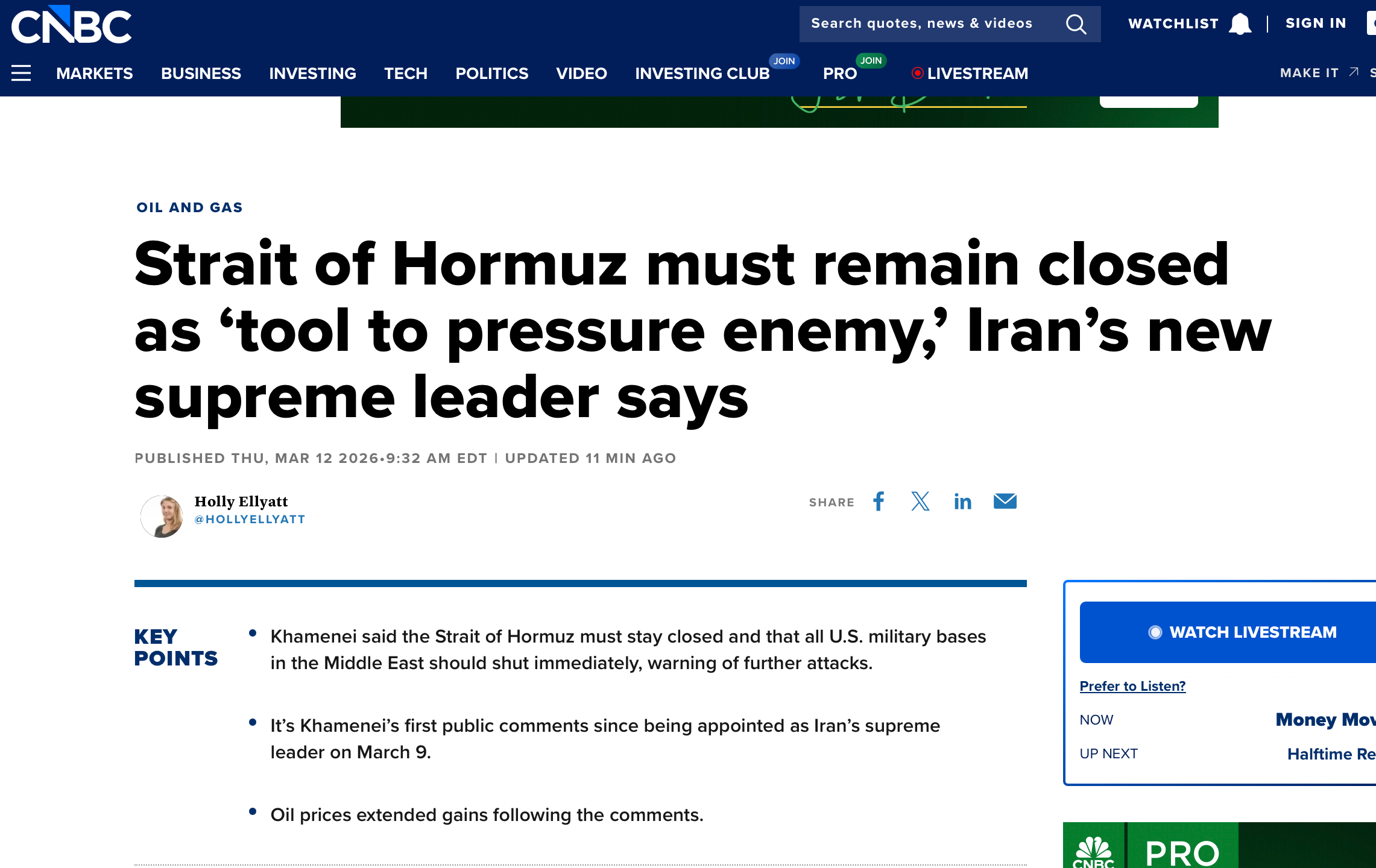
The regime, true to form, insists otherwise. Tehran’s state media has released what it calls the new Supreme Leader’s first written message, vowing to continue striking Gulf states and threatening to close the Strait of Hormuz. But no photograph has been released. No video. No public appearance. No photographs or videos of the newly installed supreme leader have been released yet, despite earlier assurances from Iranian officials and state media, fueling speculation among observers and opposition groups. Iranian state television has resorted to a linguistic tell, now referring to Mojtaba as “Jaanbaz of Ramadan,” a term that translates loosely to “wounded war veteran.” It is an inadvertent admission that something is badly wrong.
There is not merely a succession crisis in Iran. The ongoing Ghost Ayatollah episode serves as a window into the fundamental fraudulence of the Islamic Republic’s governing structure.
Every major news outlet is owned by someone — and that someone has interests. When you read a headline about regulation, trade policy, or elections, you’re rarely told that the publication running it is funded by the very people with skin in the game.

That’s why I use Ground News. It’s an independent media literacy tool — not a publisher, not a news source — that aggregates stories from over 50,000 outlets worldwide and shows you who owns each one. When you can see that an outlet pushing a particular narrative is bankrolled by a major government contractor, a pharmaceutical giant, or a billionaire with a political agenda, you start reading very differently.
Ground News doesn’t tell you what to think. It shows you who’s funding the people trying to. Today they’re offering readers of the Dossier to get 40% off the Vantage plan so you can start seeing what’s behind the headlines.
This portion of the post was sponsored content. Ground News is a fantastic website and has no editorial oversight over The Dossier.
Consider how Mojtaba Khamenei supposedly came to power. The regime’s propagandists, ignorant geopolitical analysts, and certain credulous Western outlets have described his elevation as an “election.” That word should be used cautiously, if at all, because it’s wildly misleading to the Western reader. Mojtaba Khamenei was chosen by a handful of Islamic clerics, without the consent of the people of Iran whatsoever. In a unified statement, they said on Sunday that it “did not hesitate for a minute” in choosing a new supreme leader. What they neglected to mention is what was happening behind the scenes during that deliberation. According to reporting from Iran International, the Islamic Revolutionary Guard Corps, which wields the most power in Iran (the clerics are largely ceremonial actors), told the Assembly of Experts to elect Mojtaba Khamenei as supreme leader, leading to an online Assembly of Experts meeting on 3 March. IRGC commanders were, by multiple accounts, making phone calls to Assembly members dictating a specific result.
This is the Iranian system’s dirty secret laid bare: the Assembly of Experts is not a deliberative body of independent religious jurists exercising honest theological and political judgment. It is, and has long been, window dressing for the priorities of the IRGC. The Assembly has never dismissed or even questioned a sitting Supreme Leader. Due to Ali Khamenei’s lengthy, unchallenged reign, many believe that the Assembly of Experts has become a ceremonial body without any real power, and for good reason. Candidates for the Assembly are “vetted” by the Guardian Council, half of whose members are themselves appointed by the Supreme Leader. The circularity is not accidental. It is the architecture of a self-perpetuating theocratic system.
The U.S. Treasury Department imposed sanctions on Mojtaba Khamenei under the first Trump administration in 2019, for what it said was “representing the Supreme Leader in an official capacity despite never being elected or appointed to a government position aside from work in the office of his father.” He has never run for office, never been subject to a public vote, and never held a formal position outside of his father’s inner circle. Even his father reportedly opposed the idea of dynastic succession. Reports within the offices of the Assembly of Experts said that “Ayatollah Ali Khamenei was not pleased with the idea of his son’s leadership and never allowed this issue to be raised during his lifetime.”
The bitter irony should not be lost on anyone. Iran’s 1979 Islamic coup explicitly swept away a monarchy on the grounds that hereditary rule was illegitimate. When the Islamists successfully ended the rule of the former shah, their coup seemed to have put an end to the practice of passing power from father to son. Nearly half a century later, the clerics who ushered in that Islamic takeover have handed power from father to son, under IRGC duress, while the recipient may be unconscious in a hospital bed.
What Iran has right now is not a Supreme Leader. It has a figurehead in a coma, a military apparatus running a war by “decentralized mosaic defense,” and a propaganda machine working overtime to hide the vacuum at the top. The men actually directing Iran’s missiles toward Gulf luxury hotels and shipping lanes are not answerable to a constitutional order, an elected body, or the Iranian people. They are answerable to no one.
That is not a government. That is a failing regime running on some form of autopilot, and one currently armed with a depleting arsenal of weaponry and select valuable stashes of whatever enriched uranium survived the American and Israeli strikes on its nuke sites. Washington would do well to treat this reality accordingly.
May well be true but someone has to push the regime over the edge. Someone does not include us, at least in my view. Best would be the Iranian people. We and the Israelis have degraded the regime's capacity to conduct another massacre as well as their ability to threaten the world at large. But have we degraded it enough? Typically regimes fall when the military forces they control decide they will switch sides or just go home. Thus it was with the revolution that brought the Ayatollahs to power initially as well as the French revolution, the Bolshevik revolution, the fall of the USSR, the recent events in Venezuela or tomorrow's in Cuba. If we can identify a center of resistance inside Iran, we should drop arms to even the odds and help persuade the military to go home.
There are even rumors he is actually dead, and was elected dead so that Israel can't kill the new ayatollah.
That said, since there are opposition reports coming from Iran that he is hospitalized in coma, I guess that's more likely. Who knows if he ever wakes up though.
I find it interesting that media everywhere are reporting it as fact that he issued this new statement, when in fact there are very good reasons to suspect he didn't.