

If you are to believe the reports in the media this past weekend, America is running critically low on defensive interceptors in its current entaglement with the Islamic Republic of Iran, and it’s leaving the Trump Administration with fewer options on the table to come out of the conflict with a clean result.
The Iranian regime has spent this war firing thousands of low cost drones and rockets at U.S. military bases, along with virtually every one of our regional allies. They’ve hit airports, oil facilities, and power plants, while striking American installations including Al Udeid in Qatar, Al Dhafra in the Emirates, Ali Al Salem in Kuwait, and a base in Jordan where American soldiers were killed. Iran has done its most destructive work with cheap drones and ballistics weapons bought in bulk. While its most advanced and costly ballistics have been defeated by American and Israeli long range defense systems, the “junk” is functioning to deplete our arsenals and wage a costly defense.
The counts our partners published tell the story. In the opening days the United Arab Emirates (UAE) reported detecting 174 ballistic missiles and 689 drones. Kuwait reported shooting down 97 ballistic missiles and 283 drones. Of course, months later, Iran has launched thousands more drones and thousands of additional ballistics at allied targets. It’s clear that the American defense establishment has not succeeded in accurately assessing the full quantity of Iran’s ballistics and drones.
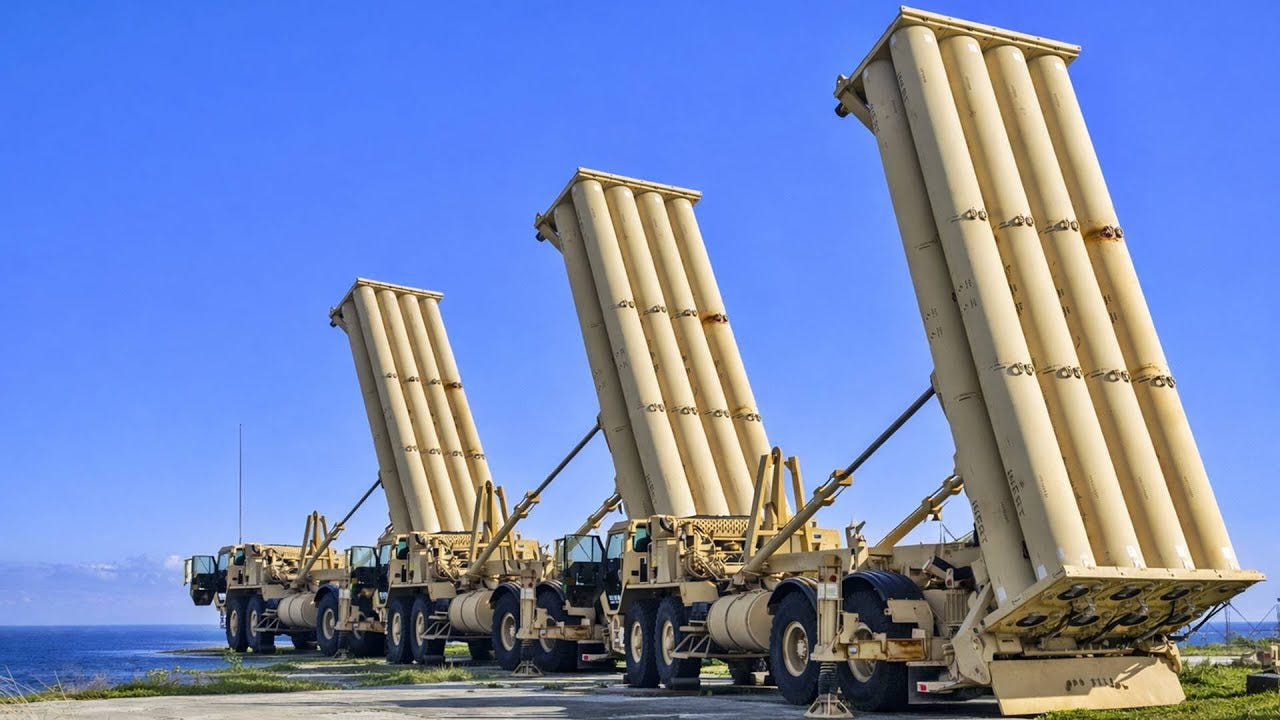
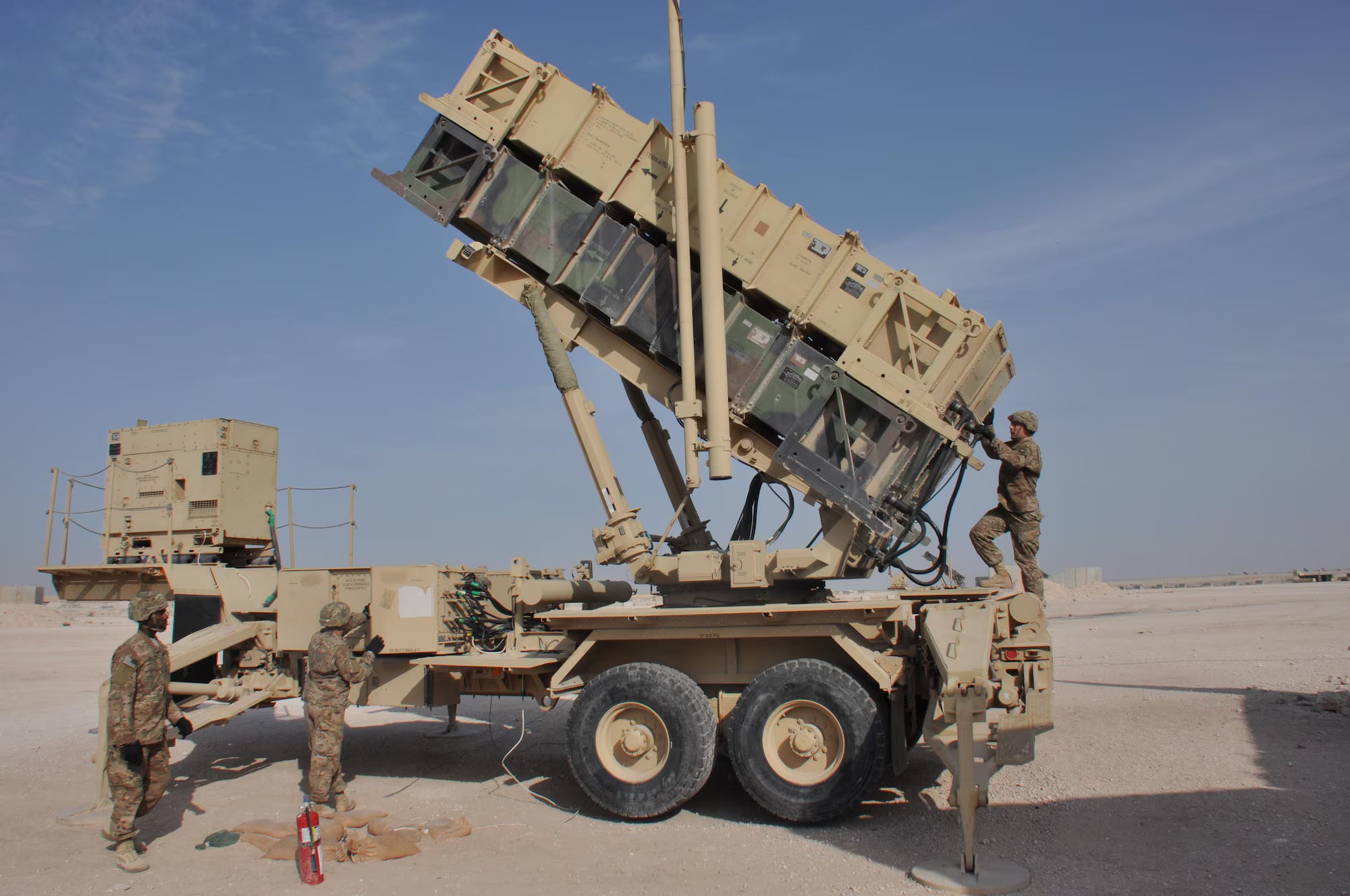
Now, all too often, America and its allies have taken to stopping drones and low grade ballistics with very expensive weapons that we don’t have the ability to manufacture rapid fashion. A Shahed-class Iranian attack drone costs Tehran between $20,000 and $50,000. The Patriot missile system’s current round, the Patriot Advanced Capability-3 Missile Segment Enhancement (PAC-3 MSE), costs about $4 million, and a Terminal High Altitude Area Defense (THAAD) interceptor roughly $13 million. Sometimes we will fire two or three at a target to be sure of a “kill.”
Everyone in the coalition is in a less than optimal position, which is leading us to the dilemma the White House faces today.
On Friday night, reports surfaced that the Trump Administration paused a two-week bombing campaign after top officials, including General Dan Caine, raised concerns about the ammunition supply.
Nothing in the American arsenal was built to shoot down anything cheap. The Patriot program began with a 1961 Army requirement. THAAD was proposed in 1987 and did not field a unit until 2008. The whole system was designed many decades ago to stop Soviet bombers and Scud missiles. These are targets so expensive that nobody was worried about trading a million-dollar interceptor for what was on the receiving end of the warhead. Of course, nobody wants to see the United States suffer casualties merely because expensive missiles shouldn’t be used against inexpensive attack vehicles. Yet it’s clear that America does not have the manufacturing capacity to continue this status quo for a significant amount of time.
Throughout America’s Global War On Terror (GWOT), the threat of a non state or state actor with a massive drone fleet and/or cheap long range ballistics was rather inconsequential. Only until recent years did that threat mass proliferate on the battlefield. Unfortunately, tools that can be much more efficient for these defenses, like lasers and microwave weapons, are not quite ready for primetime.
The deeper problem is not the missile. It is what goes inside it. Every missile needs an explosive and a fuel, and America’s manufacturing capacity has lagged on this front.
America last made its own trinitrotoluene, the standard military explosive better known as TNT, in 1986. We now buy it from a single European supplier, with a replacement plant only now going up in Kentucky. The Radford Army Ammunition Plant in Virginia is the only place in the country making nitrocellulose, the base ingredient of gunpowder and artillery propellant. It was built in 1941. Essentially one company is certified to supply the chemical that makes solid rocket fuel burn, and a new plant takes about a year to permit and close to a decade to build. The number of American firms making solid rocket motors fell from six to two between 2000 and 2015.
While American plants closed and were never rebuilt, the work went overseas because much of it is unprofitable when America is not on a wartime footing. It seems like Pentagon officials just assumed private industry would keep idle capacity that no one was paying it to keep, as if a functional factory were something the market provides for free without any incentives. Plenty of money goes into dazzling technological applications, as evidenced by our $1 trillion annual defense budget, but not enough goes into the hardware and the unglamorous plants underneath.
America builds roughly 600 Patriot interceptors a year, and half are already promised to the eighteen other countries using Patriot. Boeing makes the seeker, the small radar in the nose that finds the target, for every one at a single plant in Huntsville, Alabama. It takes 24 months to build the missile and 30 to build its motor.
The regime in Tehran does not have to defeat our air defenses through qualitative power. It only has to keep sending cheap drones at Dubai, Kuwait, and American bases abroad to deplete our arsenal to the point that our reserves become critically low. Since America doe not have the capacity to produce these defense systems in rapid fashion, it’s time to consider the possibility that our current Cold War-era shoot down policy needs to be revised significantly until new technology arrives or faster production is possible.
Maybe a drone with a small air to air missile to take down the drones. Make our drones a little faster so they can get within range. Or even just drones that crash into the drones or get close and explode or drone that shoot off bird shot -00 buck shot. If we can fill the air every fourth of July with fireworks, why can't we do the same to take down drones? You don't need to get all of them. Just as a first line of defense then what gets through needs to be dealt with using more expensive interceptors.
Personally I do not believe this current narrative (US getting its ass kicked by Iranian drones). Remember back in 2009, Obama was the "drone president".
We invented this technology. All DARPA.
So why do they want us to believe that we are running out of ammo?
Oh lets remember the WEF narrative - prediction #2 for 2030 - The US won't be the world's superpower. A handful of countries will dominate.
https://youtu.be/GHiTgLn91j4?si=fNNj3Pm1GPOg617N