

President Trump is turning the tables on Iran’s economic warfare via its thievery racket in the Strait of Hormuz.
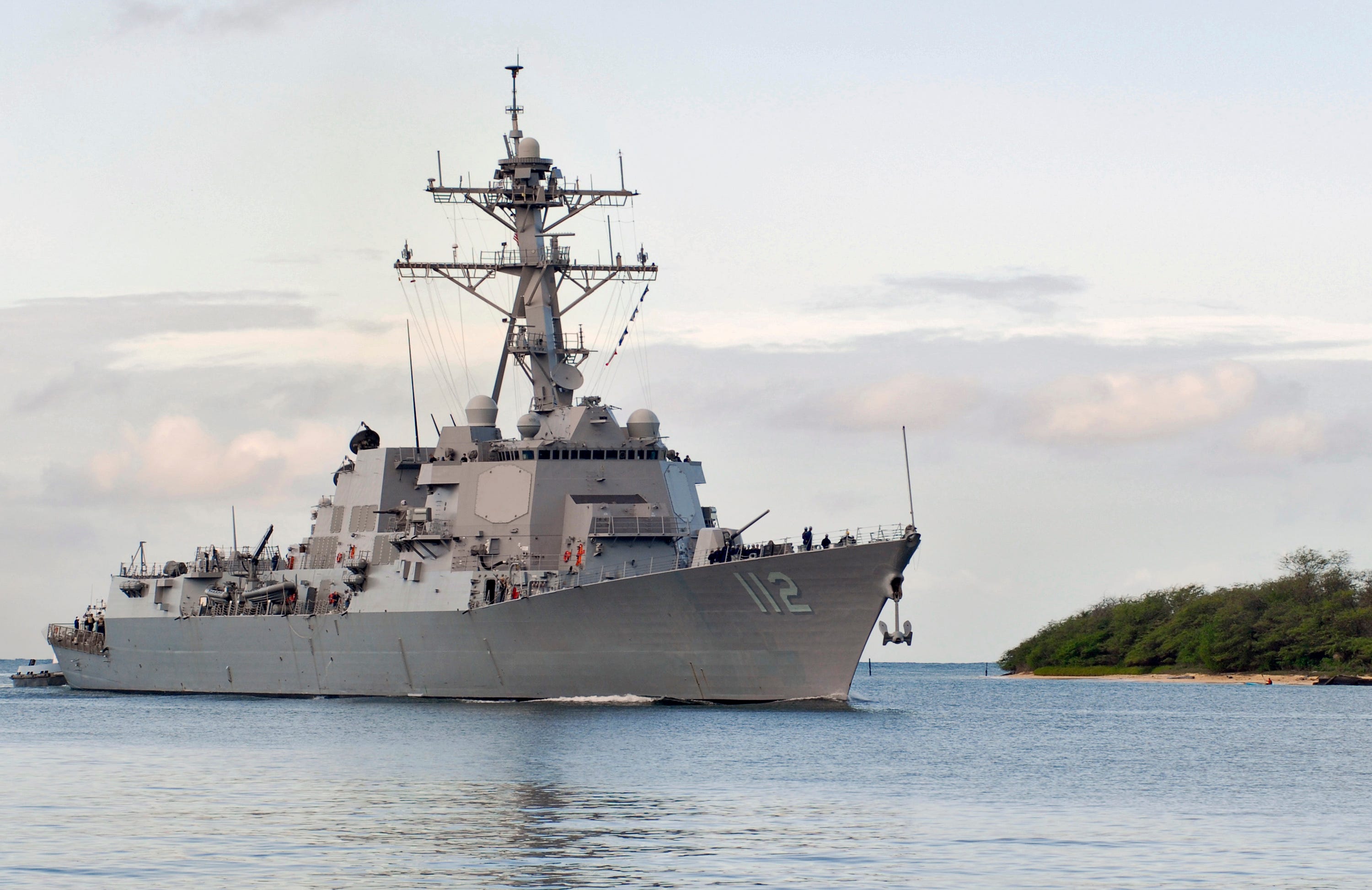
U.S. naval forces have officially begun enforcing a blockade on all maritime traffic entering and exiting Iranian ports in the Strait of Hormuz. The move follows the collapse of marathon peace talks in Islamabad, where Vice President JD Vance reported that the Iranians “chose not to accept our terms.” Iran’s response, for those who follow the regime closely, was rather predictable: bluster, threats, and a parliamentary spokesman posting a map of American gas prices near the White House with the taunt: “Enjoy the current pump figures.”
The critics are already out in force. They’ll cite $100+-a-barrel oil, rising inflation, pain at the pump. They’re not entirely wrong. There will be temporary pain. But the question about this strategy’s success comes down to who breaks first. And on that question, the answer is rather certain: Iran will.
The numbers tell the story.
Geopolitical Analyst Miad Maleki, a senior fellow at the Foundation for the Defense of Democracies, laid out the arithmetic this weekend: a U.S. naval blockade imposes approximately $435 million per day in combined economic damage on Iran — $276 million in lost exports, $159 million in choked imports. That’s $13 billion a month, drawn from a regime already struggling to make payroll.
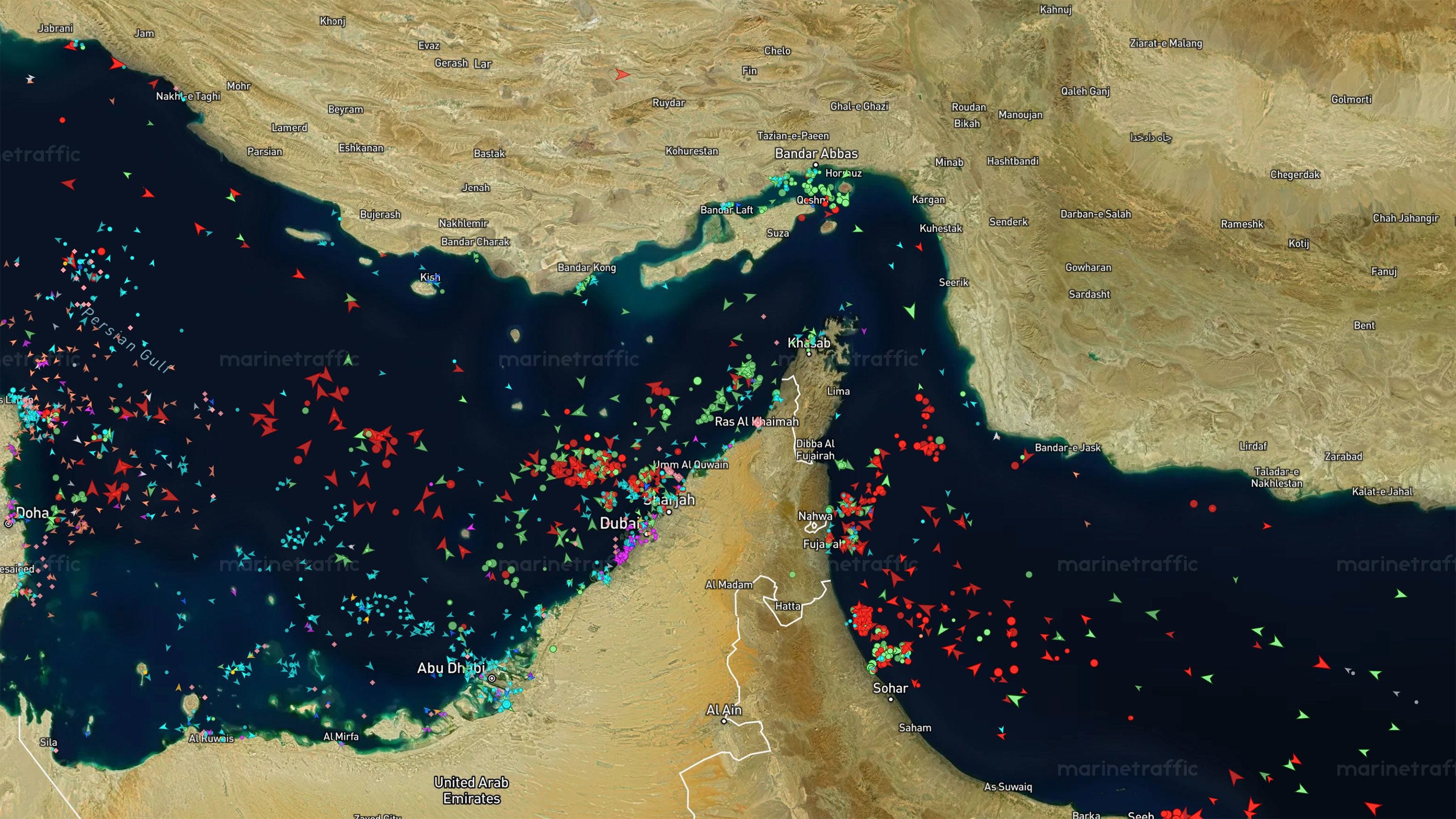
As Maleki points out, over 90 percent of Iran’s $109.7 billion in annual trade transits the Persian Gulf. Oil and gas account for 80 percent of government export earnings and nearly a quarter of GDP. Kharg Island alone — which handles 92 percent of Iran’s crude exports — generates approximately $78 billion a year in energy revenue. All of it sits inside the blockade zone.
Iran’s much-touted bypass, the Jask terminal, is largely a paper facility. Only ten of its twenty planned storage tanks were built, leaving effective throughput at around 70,000 barrels per day against a design capacity of one million. There is no meaningful escape route. Iran holds roughly 50-55 million barrels of onshore storage, and at a production surplus of 1.5 million barrels per day, available storage fills in approximately 13 days. After that, Iran must begin shutting in wells, which will cause permanent reservoir damage that cannot be quickly reversed even if a deal is struck.
Iran’s rial has collapsed from roughly 42,000 per dollar to over 1.5 million — wiping out the savings and purchasing power of ordinary Iranians. The central bank recently resorted to printing a 10 million rial note just weeks after introducing the 5 million rial note. Official inflation runs at 47.5 percent. Food inflation hit 105 percent by February. Rice prices are reportedly up sevenfold.
As Fortune reported Sunday, an insider close to the Iranian establishment described the economy as the regime’s “Achilles heel,” with authorities now worried about their basic ability to make payroll. Without sanctions relief, the money simply isn’t there. That fear is not hypothetical, as the recent protests in Iran were largely sparked by the rial’s collapse, and it spread to more than 200 cities.
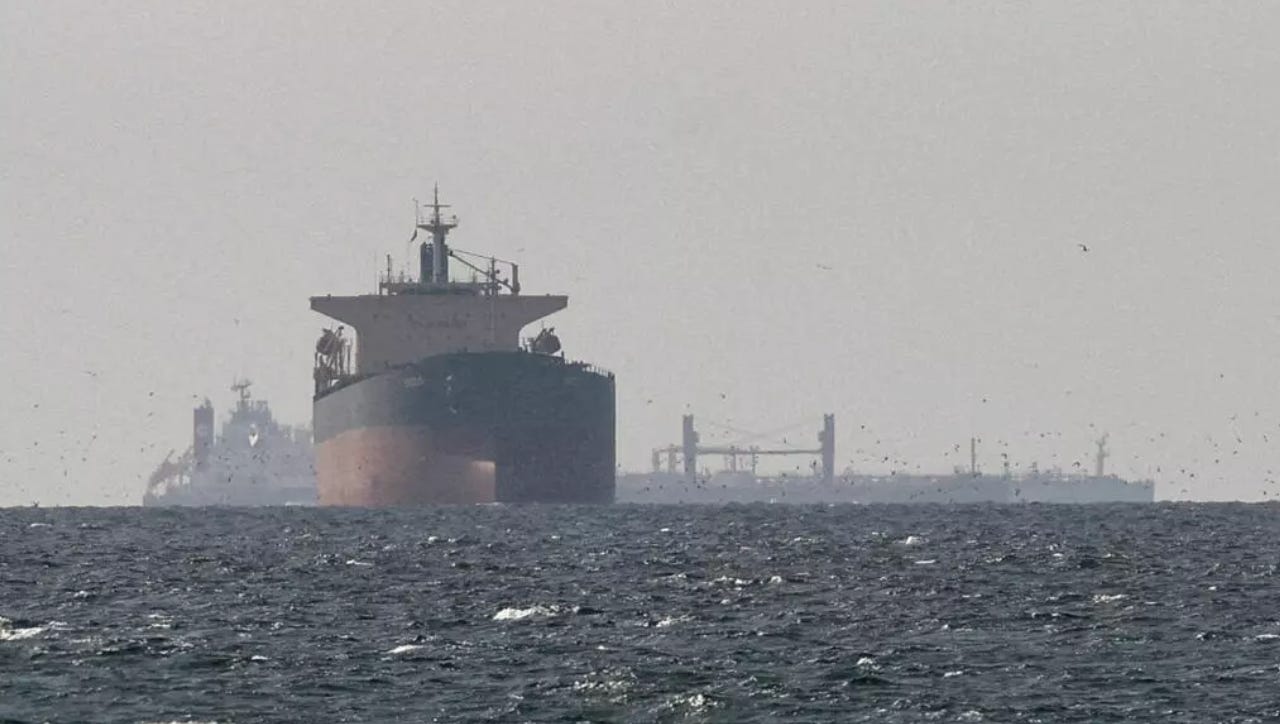
Yes, the blockade of Hormuz may hurt us too. Oil topped $100 a barrel again on Sunday. American consumers will feel this. But the United States was already absorbing damage from Iran’s blockade, which has bottled up roughly 20 percent of the world’s oil supply since February, while Iranian tankers transited freely and Tehran extracted $2 million tolls from vessels seeking passage, funneling that revenue to the IRGC.
The blockade flips the asymmetry. Instead of Iran collecting rent while the global economy bleeds, Iran becomes the most negatively impacted party immediately.
The liberal Brookings Institution’s Robin Brooks made the strategic case as far back as March: “The U.S. can implode Iran’s economy by shutting down its oil exports. That might open up the Strait of Hormuz a lot faster than anything else.” He also argued that crude prices might actually fall if the blockade is seen as ending the war quickly, because China, which buys most of Iran’s oil, would have every incentive to lobby Tehran into accepting terms.
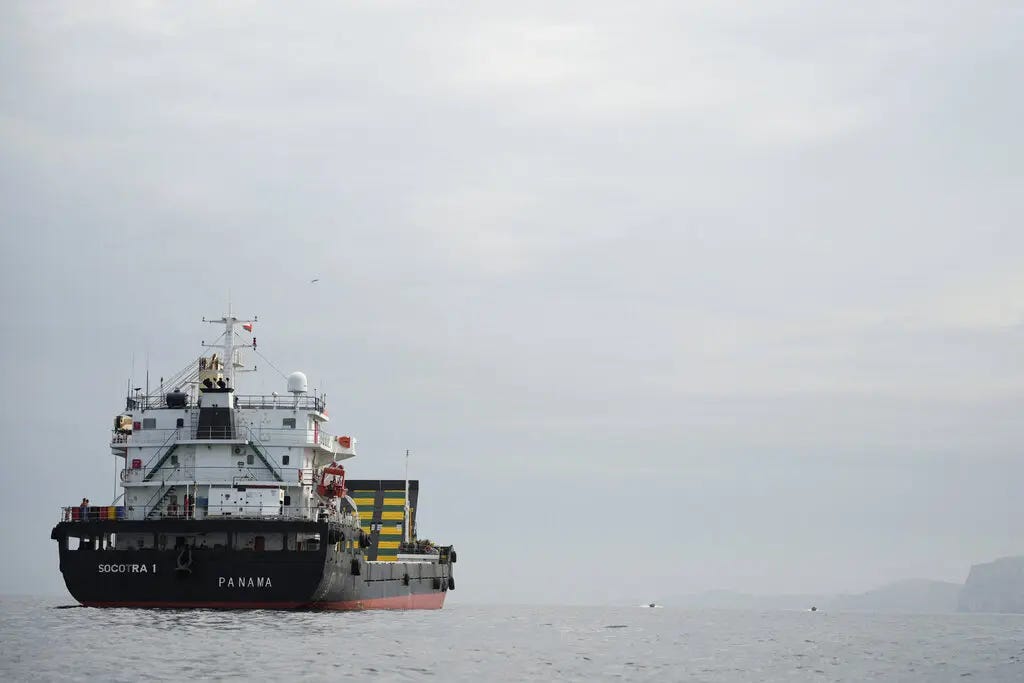
Iranian officials are already calling the blockade an act of piracy. But consider what Iran has been doing for the past six weeks: mining international shipping lanes, launching 21 confirmed attacks on merchant vessels, and holding a fifth of the world’s energy supply hostage to extract a better nuclear deal. The United States is not escalating. Rather, we are evening the ledger.
Both sides will feel this. But the Trump Administration has the massive balance sheet and the strategic wherewithal to outlast a regime running 47 percent inflation, no meaningful foreign exchange reserves, an oil storage clock ticking toward zero, and a population that was already in the streets fiercely protesting the extremist Islamic government that rules over them.
The blockade removes Tehran’s primary bargaining chip while accelerating an economic emergency that was already in motion.
Iran will almost certainly break first. We don’t have all the time in the world, but the United States is infinitely better positioned to play chicken with Iran over the Strait of Hormuz.
Good Monday All..
Very good analysis, thank you for posting this. For 47 years, 7 presidents have stated that Iran must not have a nuclear weapon. Now, when one finally acts to make the world safer, a lot of people get on his case for doing so. What would people rather have, a nuclear armed Iran with the leaders who would use it in a heartbeat to fulfill a false ideology, or a safer world where people were not held hostage by Iran's demands???
A review of recent events shows that Iran DOES have the missile capability to reach many targets in the Middle East, Asia and Europe. Yet it seems that the Europeans would rather live under the Iranian nuclear threat rather than do something about it. The same applies to many US Citizens and politicians. Of course one party would subject the world to Iranian tyranny rather than support Mr. Trump. They want to see him fail.
BTW if Mr. Biden and the Democrats had not worshipped on the alter of climate change, we could have now had a better oil distribution system, the Keystone Pipeline and more refineries.
What concerns me is the propensity of the American Voter to vote against their best interests, this includes voting control of the senate and house to the Democrats in the mid-terms.
These are my thoughts on the topic, but believers know that The Lord is in control of all events and His plans will prevail.
Have a great week everyone.