

Operation Epic Fury, the massive U.S.-Israeli strike campaign launched February 28th, targeted Iran’s nuclear and ballistic weapons program with devastating precision. President Trump’s stated goals are being executed by the greatest fighting force the world has ever known. And preventing the world’s leading state sponsor of terrorism from obtaining nuclear weapons is absolutely a core American national security interest.
But stopping Iran’s nuclear program isn’t the only strategic victory here. And it might not even be the most significant one.
Operation Epic Fury is also delivering a crippling blow to China’s energy security and, by extension, Beijing’s ability to move on Taiwan. While the strikes targeted Iranian infrastructure, the strategic damage extends to the Pacific. This operation weakens China’s position in America’s ongoing Great Power competition with the Chinese Communist Party.
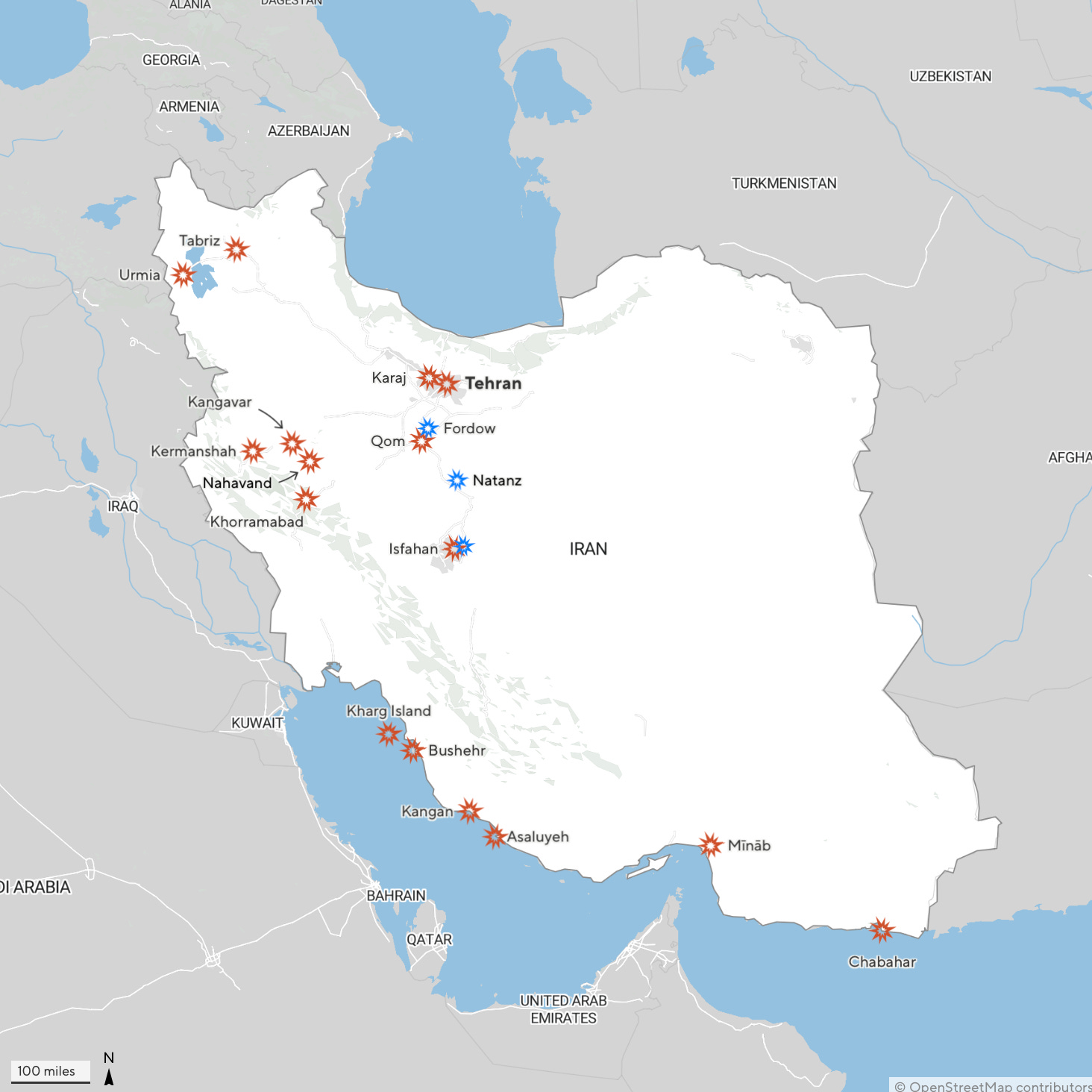
Here’s the strategic picture that deserves more attention.
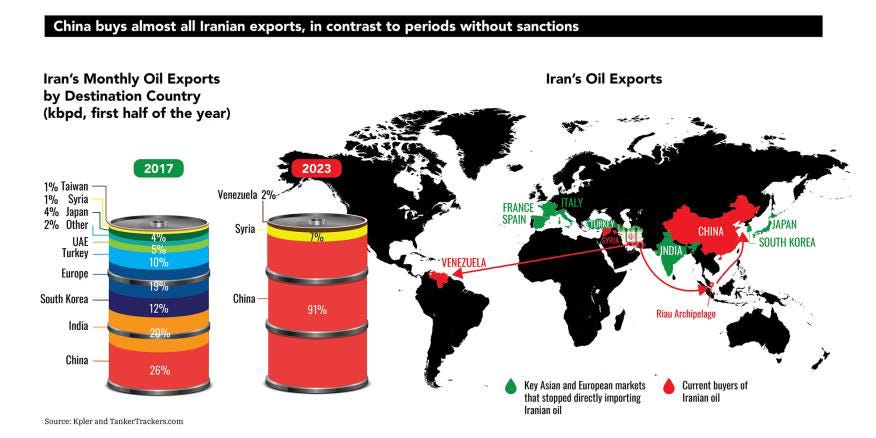
China purchases over 90 percent of Iran’s oil exports, which amounts to well over one million barrels per day. That oil accounts for around 15 percent of China’s total crude imports, and it is delivered at a steep discount because American sanctions make Iran desperate for buyers.
If war breaks out over Taiwan, global sea lanes become contested within hours. Beijing needs alternative energy sources that can’t be quickly cut off by American naval power. This is why they placed so much value in the cheap corridor through Iran.
Iran has been a critical pillar of that strategy. A stable Iran, protected from Western military action by Chinese diplomatic cover, gave Beijing guaranteed energy access that U.S. planners couldn’t easily disrupt.
Operation Epic Fury is in the process of eliminating that pillar. If the regime that rules Iran falls, China will lose its most important hedge against energy strangulation in a Pacific conflict.
Iran’s regional proxies (Hezbollah, Hamas, Houthis, Iraqi militias, etc) have functioned as strategic attrition against America. However, thanks to Israel’s post October 7th campaigns against several of these forces, the United States is in better position to compete with Beijing directly. Yet these proxies still hamper American resources, and China benefited from watching U.S. forces bleed resources managing seemingly permanent Middle East crises, all thanks to the mullahs in Tehran.
If Operation Epic Fury collapses the Iranian regime, the proxy architecture loses its sponsor and disappears virtually overnight. The Middle East becomes manageable with a key ally in Israel, which becomes the regional strong horse, allowing for a lighter American footprint, freeing ships, aircraft, munitions, and attention for the Indo-Pacific.
If a Taiwan crisis erupts, the U.S. will need allies to impose economic costs on China through sanctions and other means. That coalition’s effectiveness depends on whether major energy producers participate.
If Saudi Arabia, the UAE, and other Gulf producers are so integrated into China’s economy that they refuse to curtail oil sales during a Pacific conflict, the sanctions architecture loses effectiveness. But a Middle East where Iran’s regime has been obliterated, and even overthrown, leaves Gulf partners feeling secure aligning with Washington.
The strikes, of course, also demonstrate American willingness to use force decisively. It sends a signal to Beijing not to completely discount that President Trump would take military risks defending Taiwan. The strikes certainly demonstrate American resolve, though whether Trump would actually engage in direct military conflict with China over Taiwan remains an open question. Nobody wants World War III.
Preventing a theocratic regime that funds terrorist organizations across the Middle East from acquiring nuclear weapons is clearly in American national security interests. And American grand strategy never exists in isolation. The same military action that destroys Iranian nuclear facilities also eliminates China’s most reliable alternative energy source for a Taiwan contingency, and it creates an opening for Gulf energy producers to make clearer alignment choices on the side of the United States.
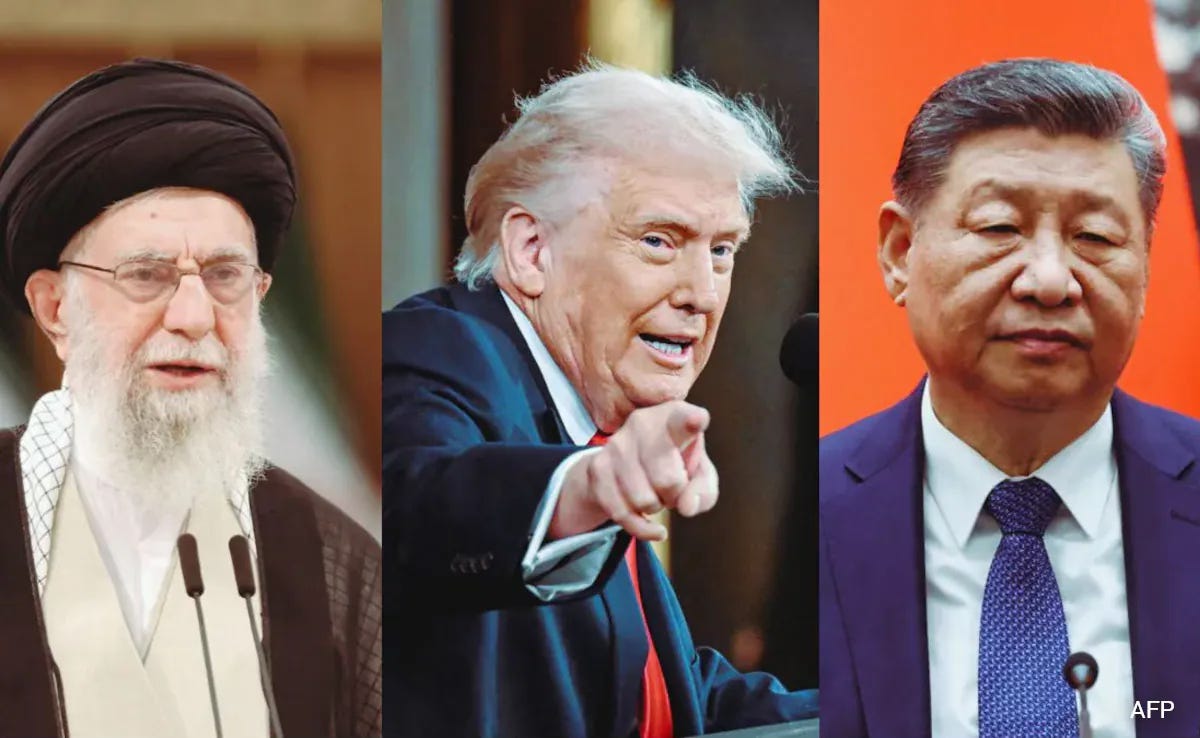
Beijing understands what just happened. That’s why both China and Russia are coping and seething at the U.N. Security Council. They watched the United States and Israel coordinate strikes that killed Iran’s supreme leader and destroyed hardened targets that took decades to build. Most importantly, they’re calculating what this means for their Taiwan timeline. China just lost a critical hedge against energy disruption, and American forces are finally being freed from being bogged down in Middle East conflicts.
Stopping Iran’s nuclear program was the primary objective. Weakening China’s strategic position for Taiwan was the bonus, and may prove just as consequential an outcome.
I think this entered into the US' military calculations. The attack on Venezuela was a forerunner to this plan, as it immediately cut China out of the energy loop from the Americas. Combine this with the reclamation of the Panama Canal Zone, and it isolated China from the Caribbean. I don't think China has the desire to fight a war in the Americas, and this does give them a reason to think differently about Taiwan.
While I was aware of the amount of Iran's oil China purchases, I wasn't thinking that far ahead in a possible Taiwan strategy for the United States.
Arab states (even the PA) have been supportive but gratitude is worth its weight in gold so it remains to be seen if they will fulfill the role that Iran was playing in China's energy picture. The Saudi's and emirates are capable of taking a lesson from this as well so maybe they will stay on side. The key thing for us is not to get sucked into nation building. That and not regime change was Bush's fatal error. There will be chaos and probably lots of violence in Iran but boots on the ground would not help them and would hurt us. Air strikes to break up the remnants of the regime and perhaps some arms or electronic support would be OK. Sending in Arabs to do the dirty work would be an error. Israelis would probably be better since Jews and Persian were friendly from the time of Cyrus the Great until 1979.